
Office Information
2121 E Coast Highway
Suite 160
Corona del Mar, CA 92625
Office: 949-204-0775
Insurance
Please call us directly so we can answer any of your insurance questions. We accept most insurances. Please contact us for details.
Directions to our office
TO SCHEDULE YOUR APPOINTMENT
Please use the form to tell us more about your dental and implant needs, and a treatment coordinator will follow up with you shortly. Or if you prefer, give us a call at 949-204-0775 and one of our coordinators will be happy to talk with you.
APPOINTMENT FORM
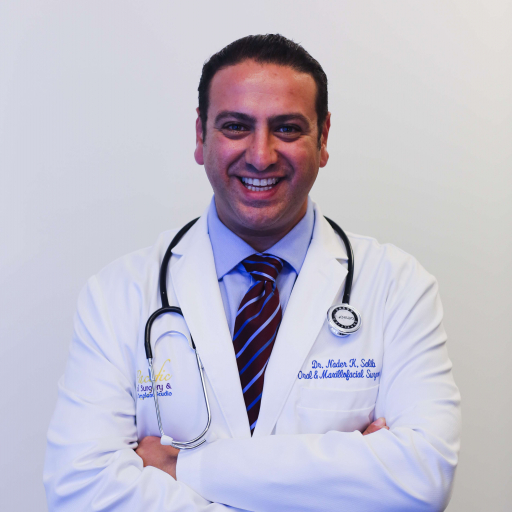
Meet your exclusive Corona del Mar-based
ceramic implant expert
Dr. Nader Salib DDS
Dr. Nader K. Salib is a native of Southern California. He graduated from the University of Southern California USC in 2000 with a dual degree in History & Biology with an emphasis in Medieval History & Molecular Biology. He later obtained his Doctor of Dental Surgery (D.D.S.) from the University of Southern California, graduating with honors. While at USC, Dr. Salib presented to both national and international audiences his recognized and internationally award winning cancer research while earning the distinction of becoming the 2003 International Hatton Award Recipient. Dr. Salib is the only Oral Surgeon & Dentist in California with such distinction. He was the recipient of the American College of Dentistry Award for his contributions to the field of dentistry at large.
After graduating from the USC School of Dentistry, Dr. Salib pursued his passion and continued into his postgraduate residency in oral & maxillofacial surgery at one of the most highly respected and largest ADA accredited programs in the country, Indiana University. During his residency, Dr. Salib continued to remain active on the national circuit, serving as the regional resident representative to the national board while continuing his clinical research furthering the knowledge of the field; again presenting at both the local and regional levels.
While there, he served as chief resident of Indiana University Hospital, Methodist Hospital; one the largest and busiest trauma hospitals in America where he worked extensively on the Trauma Surgery team, Wishard Memorial Hospital, and Riley Children’s Hospital; one of America’s most pre-eminent pediatric hospitals where he served on the craniofacial team, treating children with clefts and craniofacial syndromes. He played an integral role in establishing and maintaining the Dental Implant Seminar Symposiums at Indiana University. He has published articles in both the clinical and basic sciences.
Dr. Salib has successfully completed the rigorous, multi-year examination process required to become certified by the American Board of Oral and Maxillofacial Surgery and is proud to have achieved the status of Diplomate and is a Fellow of the American Association of Oral and Maxillofacial Surgeons. He is currently on staff at Mission Hospital in Mission Viejo, CA, to better serve his patients. Dr. Salib was also the recipient of the Humanitarian Award for his continued service to the financially destitute in Los Angeles & Orange County as well as partaking in humanitarian trips to Costa Rica.
He currently resides in Dana Point, where he enjoys hiking, running, basketball, and cooking.
GET STARTED with Dr. Nader Salib DDS Talk to a treatment coordinator949-204-0775
introducing
Z-Systems Ceramic Implants
Exclusively in Corona del Mar from Dr. Nader Salib DDS
The Only FDA Approved 100 % Metal Free Implants, Superior to Titanium Implants in Many Areas:
More natural.
Bones and gums integrate better with zirconium oxide ceramics.
Healthier.
Z-SYSTEMS implants are metal-free, biocompatible, conduct neither heat nor electrical energy, and cause no irritation to the immune system.
More sustainable.
Less plaque accretion than on titanium. This reduces the risk of perimplantitis as well as cardiovascular diseases and strokes.
Stronger.
Ceramic is much stronger than titanium.
More aesthetic.
Thanks to the white material, no gray shadows are visible even with thin or receding gums.
More visible.
Ceramic implants are opaque to X-rays, and easier to recognize in critical situations.
What Is A Dental Implant?

The implant body or post is the portion of the implant that is inserted into the jawbone. The implant body integrates with the jawbone and becomes the anchor for the new tooth.

The implant abutment is the portion of the dental implant inside the crown. Sometimes the abutment is created with the implant body as one piece. Other times, it is separate and attached to the implant with a screw. The abutment shapes the gum tissue and supports the crown.

The dental implant crown is the portion of the dental implant you see, but if done correctly, no one can tell it is not a natural tooth. The crown is bonded or cemented to the implant abutment and is commonly made of a ceramic or zirconia material because of its naturally white color and strength.